


What is APDS?
APDS is a progressive, underdiagnosed primary immunodeficiency (PI)1-4
Jump to section:

Diagnosing APDS
Impact of delayed diagnosis
Suspecting APDS
Importance of genetic testing
Immune imbalance in APDS

DIAGNOSING APDS
APDS has been misdiagnosed as another PI or condition, causing delays in correct diagnoses4
Of 39 patients who had an initial clinical diagnosis other than APDS5:
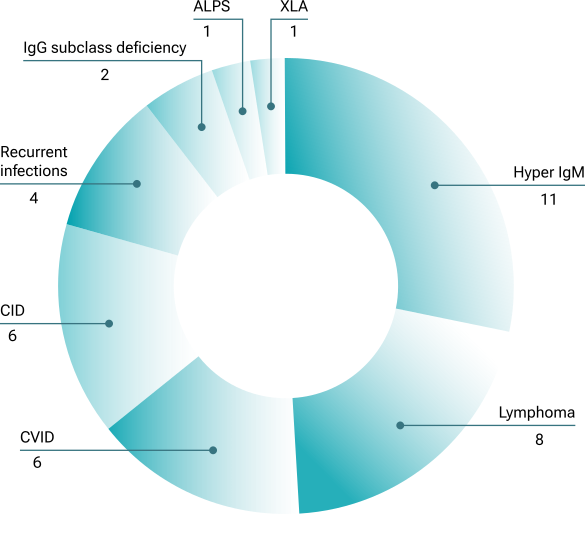
Adapted from Jamee M, Moniri S, Zaki Dizaji M, et al. Clinical, immunological, and genetic features in patients with activated PI3Kδ syndrome (APDS): a systematic review. Clin Rev Allergy Immunol. 2020;59(3):323-333.

A genetic test can help inform a diagnosis of APDS
Recognizing the symptoms and conducting appropriate genetic testing are crucial for diagnosing and managing APDS.4,6
Learn more

IMPACT OF DELAYED DIAGNOSIS
Timeline of most common pathologies seen in APDS5-8

Scroll left to view timeline

Genetic testing can help inform a diagnosis of APDS for patients and their families4,6
- Because APDS is an autosomal-dominant, inherited condition, family members of individuals with APDS should consider genetic testing, including parents, siblings, grandparents, aunts, uncles, and cousins.
- Approximately 20% of patients diagnosed with APDS had no familial connection and have de novo mutations7,9
There is a 50% chance of APDS being passed down from parent to child9,10
- Consider testing for APDS if presented with any of these clinical features5:
- Previously treated with mTOR inhibition or other immunosuppressants
- Elevated IgM levels
- Herpes virus infections
- Bronchiectasis
- Non-Hodgkin lymphoma
Missing these common pathologies may result in delayed diagnosis4
SUSPECTING APDS
Recognize atypical immune symptoms that may indicate APDS3,5,9,11,12
If you suspect PI, genetic testing can help inform an accurate diagnosis. Even a limited number of visible symptoms may indicate APDS.
People with APDS usually experience 1 or more of the following symptoms:
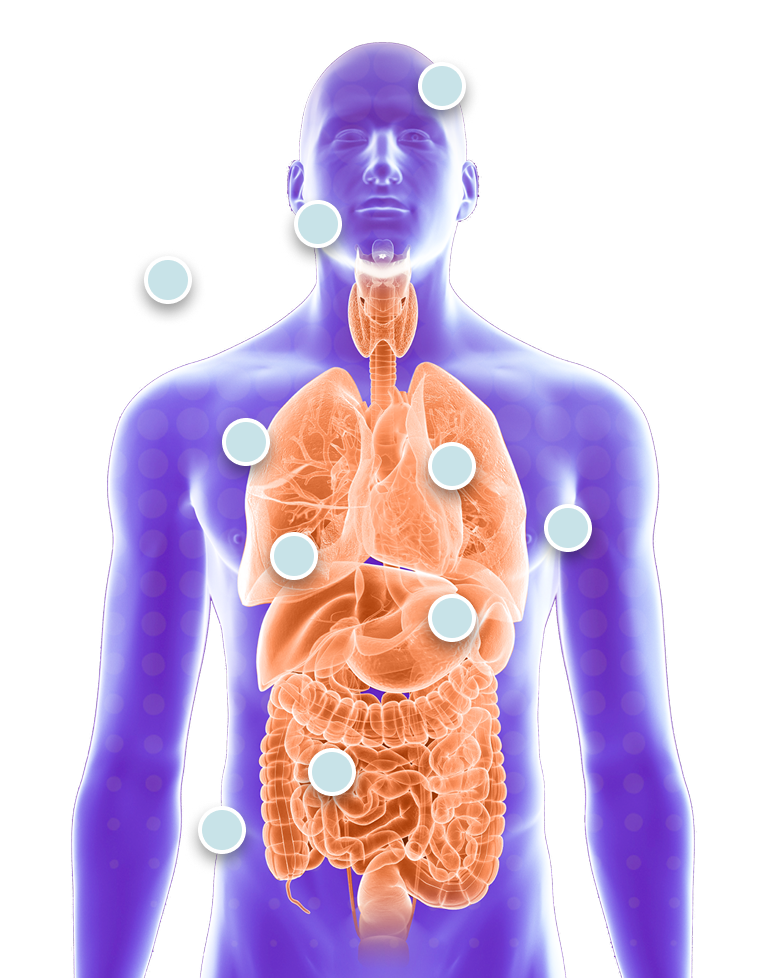
Symptoms of APDS may present differently.
IMPORTANCE OF GENETIC TESTING
If you suspect your patient may have a PI, genetic testing that includes the genes that cause APDS can help inform a timely diagnosis4,6
Sponsored genetic testing options and genetic counseling are available for eligible patients and family members, regardless of insurance coverage or financial need4,6
Order a genetic test

IMMUNE IMBALANCE IN APDS
A hyperactive PI3Kδ pathway drives immune deficiency and dysregulation responsible for APDS symptom manifestation3
Scroll left to view cell table
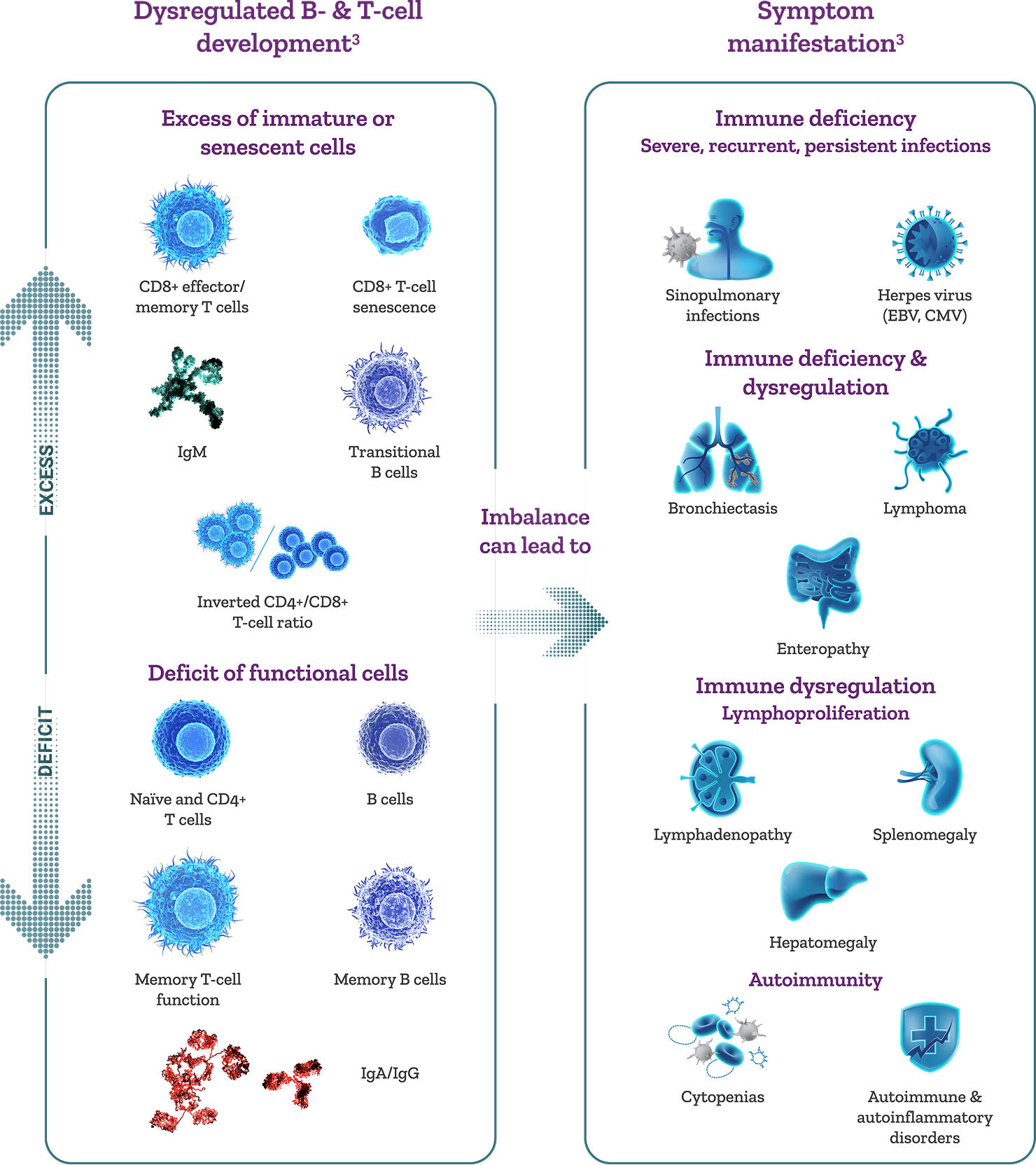
- Uncontrolled immune dysregulation and deficiency may result in severe lymphoproliferation, recurrent infections, autoimmune disorders, and lymphoma3
- Lymphoproliferation can be a manifestation of immune dysregulation and can be associated with an increased risk of lymphoma5
Newer genetic panels now include APDS variants. If genetic testing was done prior to 2018 and your patient has symptoms of APDS, consider retesting.
How Joenja Works
→
Access & Resources
→
ALPS, autoimmune lymphoproliferative syndrome; APDS, activated PI3Kδ syndrome; CID, combined immunodeficiency; CMV, cytomegalovirus; CVID, common variable immunodeficiency; EBV, Epstein-Barr virus; IgA, immunoglobulin A; IgG, immunoglobulin G; IgM, immunoglobulin M; mTOR, mammalian target of rapamycin; XLA, X-linked agammaglobulinemia.
References: 1. Rao VK, Webster S, Šedivá A, et al. A randomized, placebo-controlled phase 3 trial of the PI3Kδ inhibitor leniolisib for activated PI3Kδ syndrome. Blood. 2023;141(9):971-983. doi:10.1182/blood.2022018546 2. Angulo I, Vadas O, Garçon F, et al. Phosphoinositide 3-kinase δ gene mutation predisposes to respiratory infection and airway damage. Science. 2013;342(6160):866-871. doi:10.1126/ science.1243292 3. Rao VK, Webster S, Šedivá A, et al. A randomized, placebo-controlled phase 3 trial of the PI3Kδ inhibitor leniolisib for activated PI3Kδ syndrome. Supplemental. Blood. 2023;141(9):971-983. doi:10.1182/blood.2022018546 4. Data on file. Pharming Healthcare, Inc. 5. Jamee M, Moniri S, Zaki-Dizaji M, et al. Clinical, immunological, and genetic features in patients with activated PI3Kδ syndrome (APDS): a systematic review. Clin Rev Allergy Immunol. 2020;59(3):323-333. doi:10.1007/s12016-019-08738-9 6. Coulter TI, Chandra A, Bacon CM, Babar J, et al. Clinical spectrum and features of activated phosphoinositide 3-kinase δ syndrome: a large patient cohort study. J Allergy Clin Immunol. 2017;139(2):597-606.e4. doi:10.1016/j.jaci.2016.06.021 7. Elkaim E, Neven B, Bruneau J, et al. Clinical and immunologic phenotype associated with activated phosphoinositide 3-kinase δ syndrome 2: a cohort study. J Allergy Clin Immunol. 2016;138(1):210-218.e9. doi:10.1016/j.jaci.2016.03.022 8. Maccari ME, Abolhassani H, Aghamohammadi A, et al. Disease evolution and response to rapamycin in activated phosphoinositide 3-kinase δ syndrome: European Society for Immunodeficiencies-Activated Phosphoinositide 3-Kinase δ Syndrome Registry. Front Immunol. 2018;9:543. doi:10.3389/fimmu.2018.00543 9. Sacco K, Uzel G. Activated PI3K delta syndrome. In: Adam MP, Bick S, Mirzaa GM, Pagon RA, Wallace SE, Amemiya A, eds. GeneReviews®. University of Washington, Seattle; January 30, 2025. 10. Michalovich D, Nejentsev S. Activated PI3 kinase delta syndrome: from genetics to therapy. Front Immunol. 2018;9:369. doi:10.3389/fimmu.2018.00369 11. Anderson JT, Cowan J, Condino-Neto A, et al. Health-related quality of life in primary immunodeficiencies: impact of delayed diagnosis and treatment burden. Clin Immunol. 2022;236:108931. doi:10.1016/j.clim.2022.10893 12. Ahmad Shawaludin MQ, Zainudeen ZT, Taib F, et al. A rare case report of activated PI3K delta syndrome (APDS): diagnostic pitfalls. BMC Pediatr. 2025;25(1):898. doi:10.1186/s12887-025-06286-0